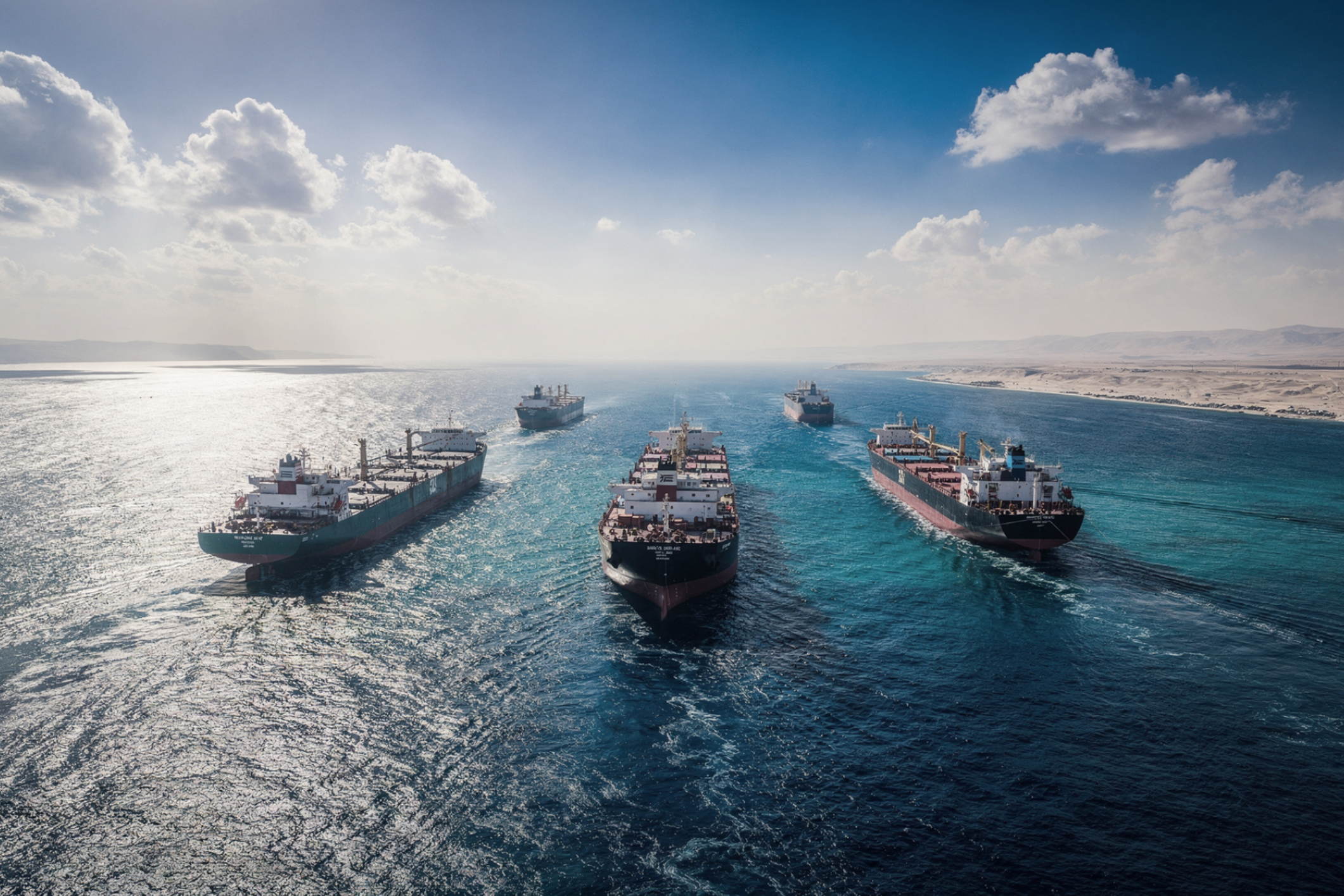
All eyes are currently on the Strait of Hormuz, which remains the single most important oil transit route in the world. Roughly 20 million barrels of oil per day pass through this narrow waterway connecting the Persian Gulf with global markets – accounting for about 20% of global petroleum liquids consumption.
At this tense moment, I hope to see an end to hostilities and the beginning of a process grounded in mutual respect and negotiation. Such a step would create the conditions for the strait to reopen and for stability to return to global energy flows.
I am taking a closer look at this issue now because recent disruptions show just how much global energy markets depend on Hormuz, making it a critical area for analysts, traders and industry observers to watch closely.
For the major energy exporters of the Gulf – including Saudi Arabia, Iraq, Kuwait, United Arab Emirates, and Iran – the strait is the primary gateway to international markets. It is equally vital for natural gas. About one-fifth of global liquefied natural gas (LNG) trade passes through it, primarily exports from Qatar, one of the world’s largest LNG producers.
At its narrowest point, the shipping channel is only about 3 km wide in each direction, making it highly sensitive to geopolitical risk. Even the perception of disruption can resonate quickly through energy markets.
Recent tensions in the region have once again demonstrated this dynamic. While many commercial vessels from countries not directly involved in the conflict have continued to transit the strait, uncertainty alone has been enough to trigger sharp market reactions, with oil prices briefly pushing above $100 per barrel.
Should tensions persist, the effects may reach both the global economy and everyday life, including:
Because of this exposure, countries and energy companies have sought ways to reduce dependence on this corridor. Pipelines across Saudi Arabia to the Red Sea and from the United Arab Emirates to the Gulf of Oman provide alternative export routes. However, these systems can only handle a fraction of the volumes that normally pass through Hormuz.
For traders, shipping companies and governments, the focus has increasingly shifted toward logistics risk. Shipping routes, insurance costs and maritime security around chokepoints such as the Strait of Hormuz and the Bab el-Mandeb, the narrow passage between the Red Sea and the Gulf of Aden, now play a central role in energy market stability.
From a broader perspective, the situation is a reminder of how interconnected global energy systems are. Stability in key regions is essential not only to the functioning of global energy markets but for the health of the global economy as a whole.
I remain hopeful that tensions in the region will ease and that diplomacy will prevail, allowing this vital corridor to continue operating safely and reliably – supporting global trade and economic stability.