It is the middle of the summer season in Turkey and a good moment to reflect on where the tourism sector is heading. In this blog, I outline a vision for the future of Turkey’s tourism industry – moving beyond volume to focus on value, mix and positioning.
With more than 60 million international visitors and around $64.4 billion in annual tourism revenue, Türkiye is firmly established among the world’s leading tourism destinations. But the more interesting shift is happening underneath those headline numbers.
Visitors are staying longer, spending across more segments, and moving beyond the classic summer beach model. The average stay is now 10.7 days, well ahead of countries like Spain, Italy and France.
Looking ahead, the $68 billion tourism revenue target for 2026 looks realistic. Around 62% of hoteliers expect further growth, driven by strong demand across Türkiye’s key higher-value segments.
Türkiye’s tourism shift
Türkiye is steadily diversifying its tourism offer:
There are also initiatives helping extend the season. One example is the Night Museums programme, now in its third year. Selected museums and archaeological sites stay open into the evening between June and October. It helps spread demand, reduces pressure in peak hours and improves the overall visitor experience. Last year, it attracted over a million visitors.
Adventure tourism is also creating local impact. In places like Köprülü Canyon, rafting and outdoor activity tourism is now an important source of seasonal employment, especially for students and young workers.
There are still challenges – inflation, labour pressure and regional uncertainty are real factors – but the broader trend is clearly upward.
Bodrum is moving into a different category
Within this story, Bodrum is increasingly being mentioned alongside destinations like Santorini, Mykonos and Dubrovnik – not because it is trying to copy them, but because it is evolving in a similar direction.
Across the Mediterranean, the demand profile has changed. Travellers are no longer choosing destinations just for beaches. They want identity, history, food, walkability and a sense of place.
Bodrum fits that shift well.
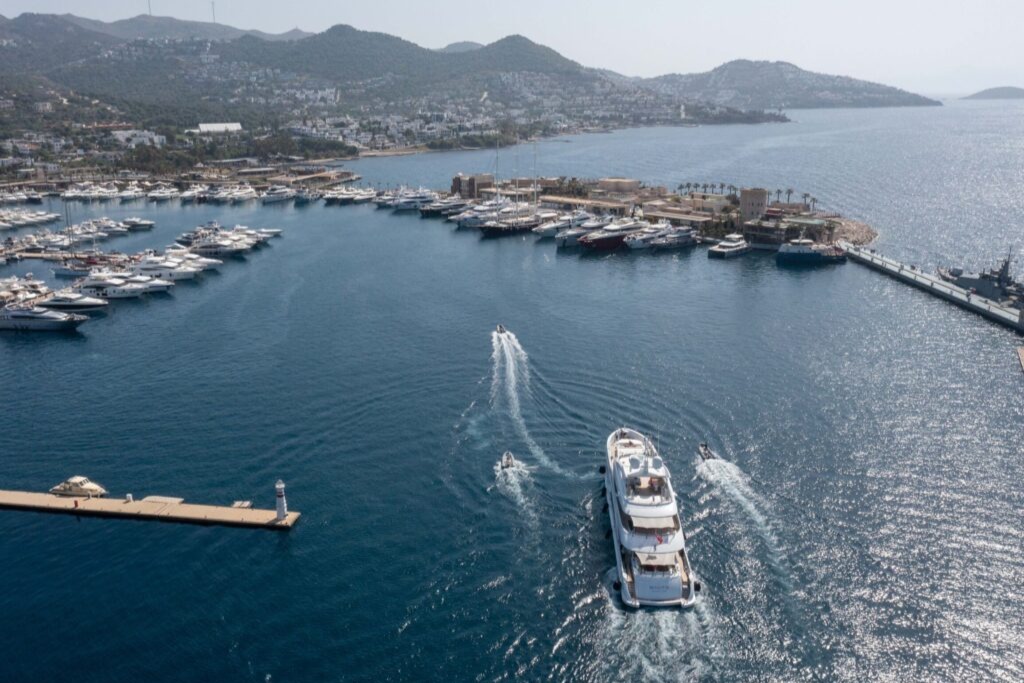
It has depth – from its origins as ancient Halicarnassus to Bodrum Castle, its maritime heritage, archaeological layers and traditional Aegean architecture. At the same time, it has developed into a modern luxury destination with boutique hotels, waterfront living, strong gastronomy and a growing marina ecosystem.
The Aegean is becoming a connected luxury corridor
Another important shift is how the Aegean is functioning. It is no longer a collection of separate destinations. It is increasingly operating as a connected tourism route. That means:
In this structure, Bodrum is becoming a key node in a wider Mediterranean luxury circuit.
Especially important are marinas, waterfront developments and hospitality assets that support mobility and high-end demand.
Personal view
Having invested in Türkiye’s tourism sector and through my ownership of Bodrum Marina, I have seen the country’s evolution and believe its greatest tourism growth still lies ahead. The opportunity now is not simply to welcome more visitors, but to continue attracting higher-value travellers, extending stays and broadening the tourism offering beyond the traditional summer season.
Bodrum is well placed to play a leading role in that transition. Its combination of heritage, natural beauty, luxury hospitality and maritime infrastructure gives it a unique position within the Mediterranean.
What matters now is maintaining this momentum and continuing to move Türkiye up the value chain as one of the world’s leading tourism destinations.