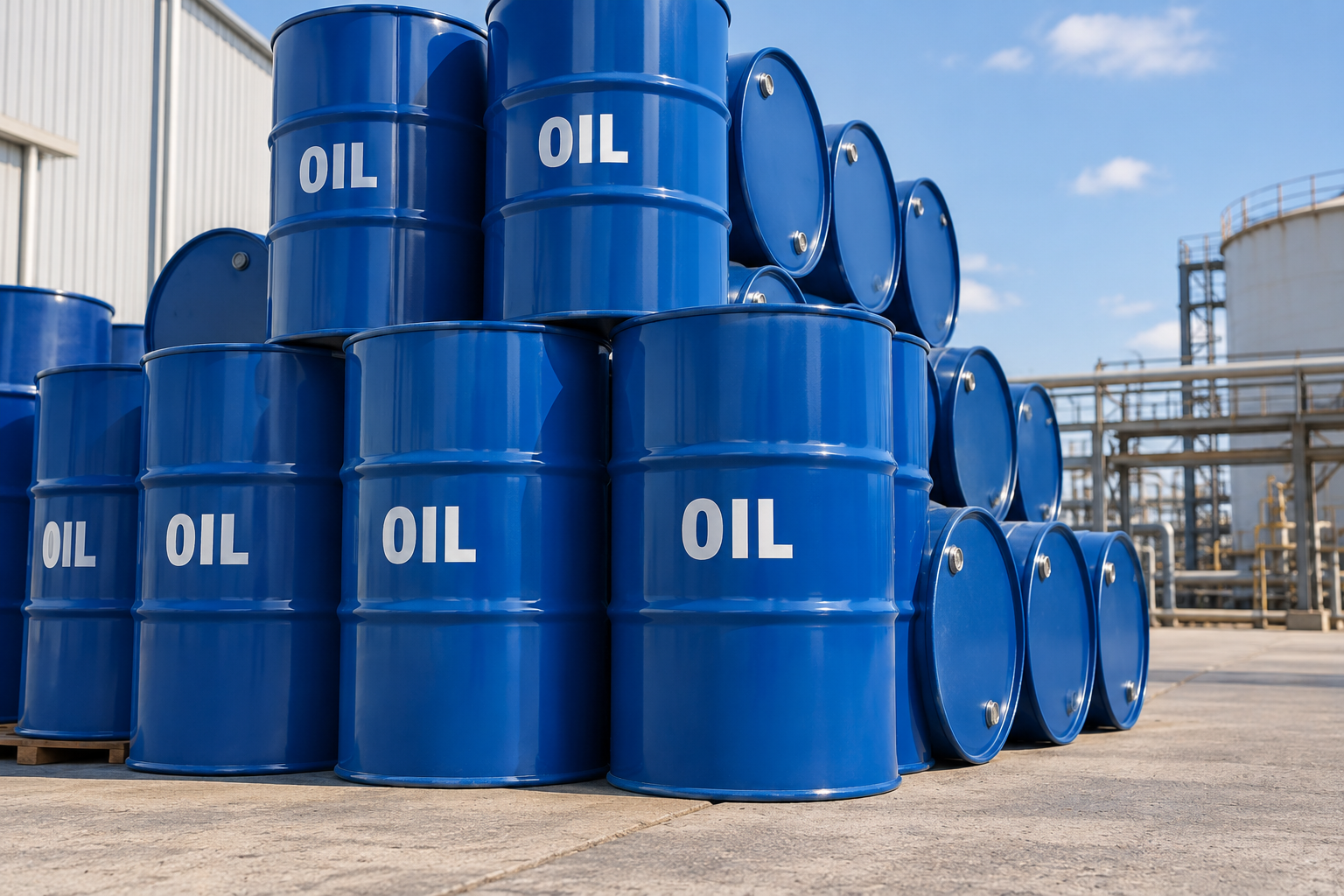
Anyone following financial news will have seen a headline like “Brent crude is trading at around $100 a barrel” – well above levels from earlier this year, with tensions around the Strait of Hormuz keeping supply on edge. It reads like a simple fact. It isn’t one – there is no single global price for oil.
Every cargo is priced on its own, and the final number is never just whatever appeared on a screen that morning. That gap matters more than usual right now: Saudi Arabia was forced to shut its East–West pipeline earlier this month after a drone attack, cutting off one of its main routes to market that avoids Hormuz altogether. Today’s high prices are being driven largely by this kind of geopolitical risk, not ordinary supply and demand – which is exactly why the headline number and the physical reality are pulling further apart.
Having spent years in oil trading, I have found this to be one of the least understood parts of the energy business. I am writing about it now because oil has barely left the news, and most of that coverage still treats “the oil price” as a single number. That is the part I want to explain. Public debate tends to focus on geopolitics and OPEC decisions – but the mechanics of pricing matter just as much, and understanding them makes the headlines easier to read.
It starts with a benchmark
The two most widely used reference prices are Brent and West Texas Intermediate (WTI). Neither is “the” price of oil – both are simply a common starting point that lets buyers and sellers around the world speak the same language. Brent is used, directly or indirectly, to price around 80% of the world’s traded crude, making it the dominant international benchmark. WTI, priced at the Cushing hub in Oklahoma, is the main North American benchmark.
Think of these benchmarks as a base price rather than a finished one. If Brent is trading at $70 a barrel, that doesn’t mean every producer receives $70 – a cargo is typically priced as Brent plus or minus a differential.
Quality drives the differential
That differential comes down to the crude itself. Not all oil is alike. Some grades are “light and sweet” – low in sulphur, easier to refine, and able to yield more petrol, diesel and jet fuel per barrel. Brent itself falls into this category. Other grades are heavier or more sour, and need more complex – and costly – refining.
Refineries care about this a great deal, because it goes straight to their profitability. A high-quality crude can command a premium over Brent; a heavier, more sulphurous grade may trade at a discount. These premiums and discounts shift all the time, as refinery demand, maintenance schedules and regional supply change.
Location matters as much as quality
A cargo sitting in the North Sea isn’t worth the same as an identical cargo thousands of miles away. Freight costs, insurance and local demand all shape the final price. So does the refinery that will receive the oil. A grade of crude that suits one refinery may not suit another. This is why traders rarely talk about buying “Brent” on its own. They talk about buying “Brent plus $1.20,” and that differential is often where much of the real commercial value sits.
Futures: the market most people actually see
When headlines say oil prices rose on economic data or fell after a central bank announcement, they are almost always describing futures contracts, not physical barrels changing hands.
A futures contract is simply an agreement to buy or sell oil at a set price on a future date. Most of these contracts are closed before they expire. Banks, hedge funds and companies use them to manage price risk – almost none of them end with someone actually collecting a tanker of oil. For every barrel that changes hands physically, many more are traded on paper.
This “paper market” isn’t a distraction from the real business of oil – it’s essential to it. It provides transparent price discovery and gives producers, refiners, airlines and industrial buyers a way to hedge against volatility. The important thing to remember: the paper market is much bigger than the physical one. That is why short-term price swings don’t always match what is really happening with supply and demand.
That gap between the paper price and physical reality is usually a background fact of the market. Sometimes, though, it becomes the whole story.
When the gap becomes the story
During the recent conflict involving Iran, that gap opened dramatically. As the Financial Times reported (FT), near-month oil futures were trading around $100 a barrel while physical cargoes were reportedly changing hands at 80–100% above that – with diesel and jet fuel seeing similarly steep premiums, driven by shortages and stretched refining capacity. This is exactly the kind of moment where a desk stops trusting the futures screen and starts calling around for actual barrels.
In other words, the screen price and the price refiners were actually paying to secure real barrels had almost nothing to do with each other. When supply is genuinely scarce, the question stops being “what is the price of oil?” and becomes “can I actually get the oil I need, where and when I need it?” (FT). Futures reflected a highly liquid financial market; physical prices reflected the immediate, strategic value of barrels that were hard to come by. The lesson for anyone watching the headlines: the quoted price tells you the starting point, not what it actually costs to secure a barrel this week.
The opposite can happen too. In April 2020, as COVID lockdowns brought travel and industry to a near-standstill, oil demand collapsed almost overnight. WTI briefly traded below zero – falling to around -$37.63 a barrel at one point – as traders holding futures contracts found themselves desperate to avoid taking delivery of oil nobody had anywhere left to store. It was the same underlying gap between paper and physical, just running in the other direction – too much oil and nowhere to put it.
Managing risk, not just price
A trader buying a cargo today doesn’t accept the quoted price at face value. They are managing several risks at the same time. The purchase price is usually linked to Brent, so they may sell Brent futures separately to fix that part of the deal. At the same time, they are managing freight costs, currency risk and the agreed price difference for the exact grade of oil they are buying. What looks like one transaction is often several linked trades, all designed to strip out uncertainty.
The price you see vs. the price you pay
A refinery doesn’t buy headlines. It buys a specific crude grade, with specific qualities, delivered to a specific location, at a negotiated differential against a benchmark – and in moments of real scarcity or glut, even that benchmark can drift a long way from what is actually changing hands. The benchmark supplies the common language; the differential reflects commercial reality.
Seen this way, the oil market is not one global auction with a single price. It is more like thousands of separate negotiations. All of them use the same reference point, but each one is shaped by quality, location, logistics – and sometimes, simply by how badly someone needs that oil right now. That, to me, has always been the most interesting part of this business: long before the politics and the headlines take over, a highly sophisticated commercial system is quietly matching buyers and sellers every single day. Most people never see it.