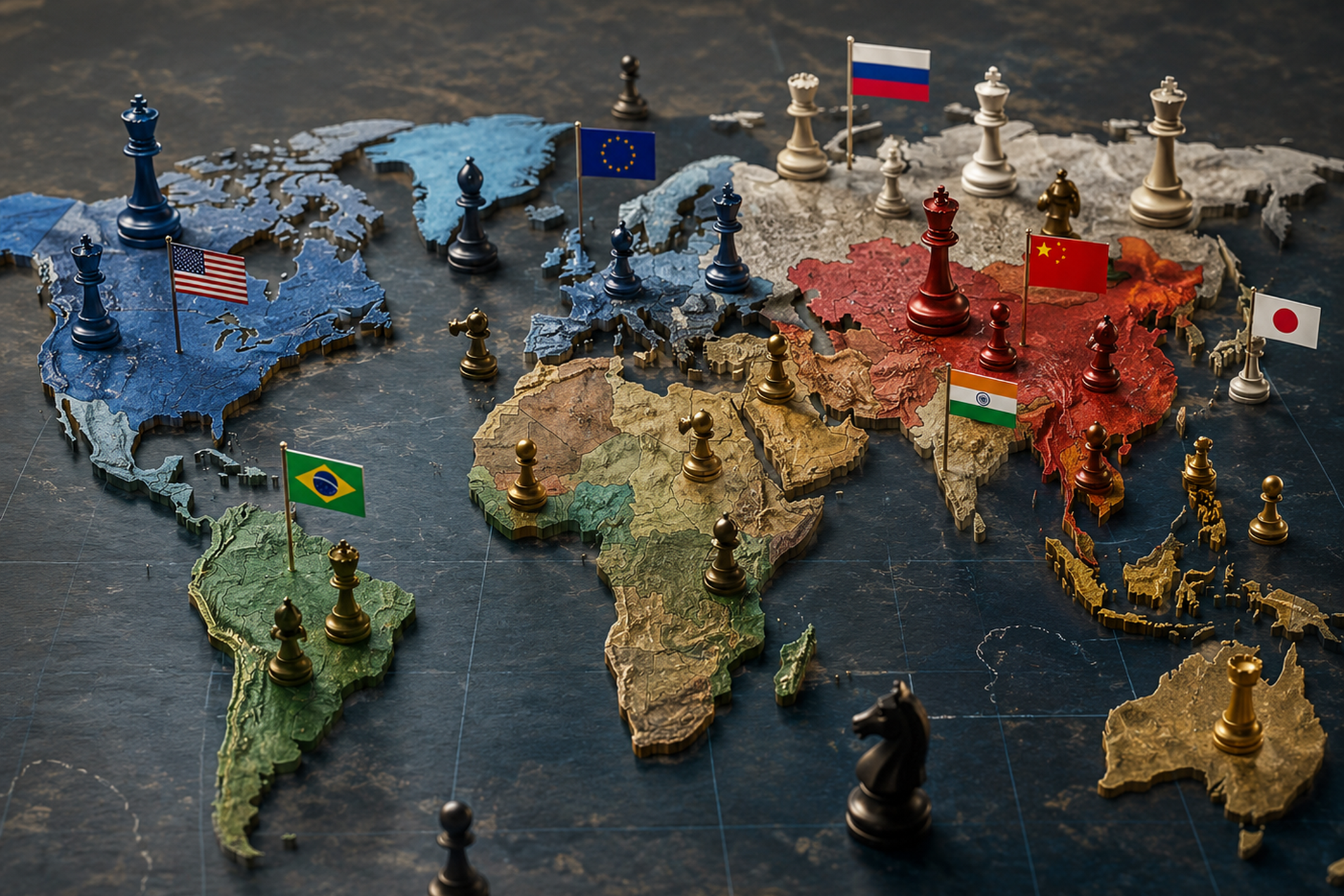
There was a time when CEOs and business leaders mainly focused on competitors, customers and regulators. Those things still matter, but they are no longer the full picture.
Today, geopolitics is part of the job. Trade tensions, wars, sanctions, energy shocks and policy changes can move markets just as quickly as company earnings.
That means CEOs, executives and operators now need to think about global political risks as part of running a business. As McKinsey & Company has noted, modern CEOs – even those highly skilled in finance, operations and other traditional business disciplines – now need to actively develop their geopolitical IQ.
The outside world is now part of the business
Business strategy used to focus mostly on what happened inside the company – things like spending, operations, hiring and growth. The outside world was something businesses reacted to later.
That is no longer the case.
Today, supply chains can break because of politics. Costs can rise because of energy prices or sanctions. Access to markets can change because of decisions made far outside the company.
I have seen business decisions that looked solid on Monday become outdated by Friday because the world changed so quickly.
The leaders who adapted fastest were not always the smartest people in the room. They were the ones willing to look beyond the company and pay attention to what was happening around them, even when it was uncomfortable.
The headline problem
One pattern I have seen again and again is smart people reacting too quickly to headlines.
It’s understandable. Markets move fast now. One statement, leak or policy change can affect prices within minutes. If you run a business, doing nothing during those moments can feel risky.
But from my experience, the bigger problem is usually overreacting, not waiting too long.
Headlines rarely tell the full story. Emotions often move faster than reality, and markets can swing back once things calm down. We see this after ceasefires, policy announcements or changes in central bank messaging.
The real skill is staying calm while everyone else reacts. Not ignoring the news, but not letting it control your decisions either. The key is knowing the difference between what has truly changed and what has simply been repriced by the market.
Scenario thinking as a leadership tool
I believe scenario thinking is more useful than trying to predict the future. The goal is to think through a few realistic outcomes and understand what each one could mean for the business.
This is not a new idea. Companies have used scenario planning for decades. One well-known example is Shell during the oil crises of the 1970s. What has changed today is how often leaders need to use this approach. It can no longer be something you do once a year.
In practice, leadership teams need to get better at asking difficult questions, such as:
Fundamentals still matter most
Volatility often shows which businesses are truly strong and which were only doing well because conditions were easy.
Strong companies are not built during crises. Their strengths already exist before problems happen. Things like a healthy balance sheet, diversified revenue, strong customer relationships and operational flexibility become even more important when the environment gets uncertain.
The same is true for company culture and decision-making. If a business can only think clearly when things are stable, it will struggle when markets become noisy and unpredictable.
Final thought
Understanding geopolitics is becoming an important leadership skill, much like financial knowledge became important years ago. Not because CEOs need to become foreign policy experts, but because business and geopolitics are now closely connected.
The goal is to stay calm under pressure, ask better questions and avoid making rushed decisions just because everyone else is reacting.
The leaders who seem “lucky” during unstable times usually are not. They are simply better at blocking out the noise, handling uncertainty and staying clear-headed while others panic.