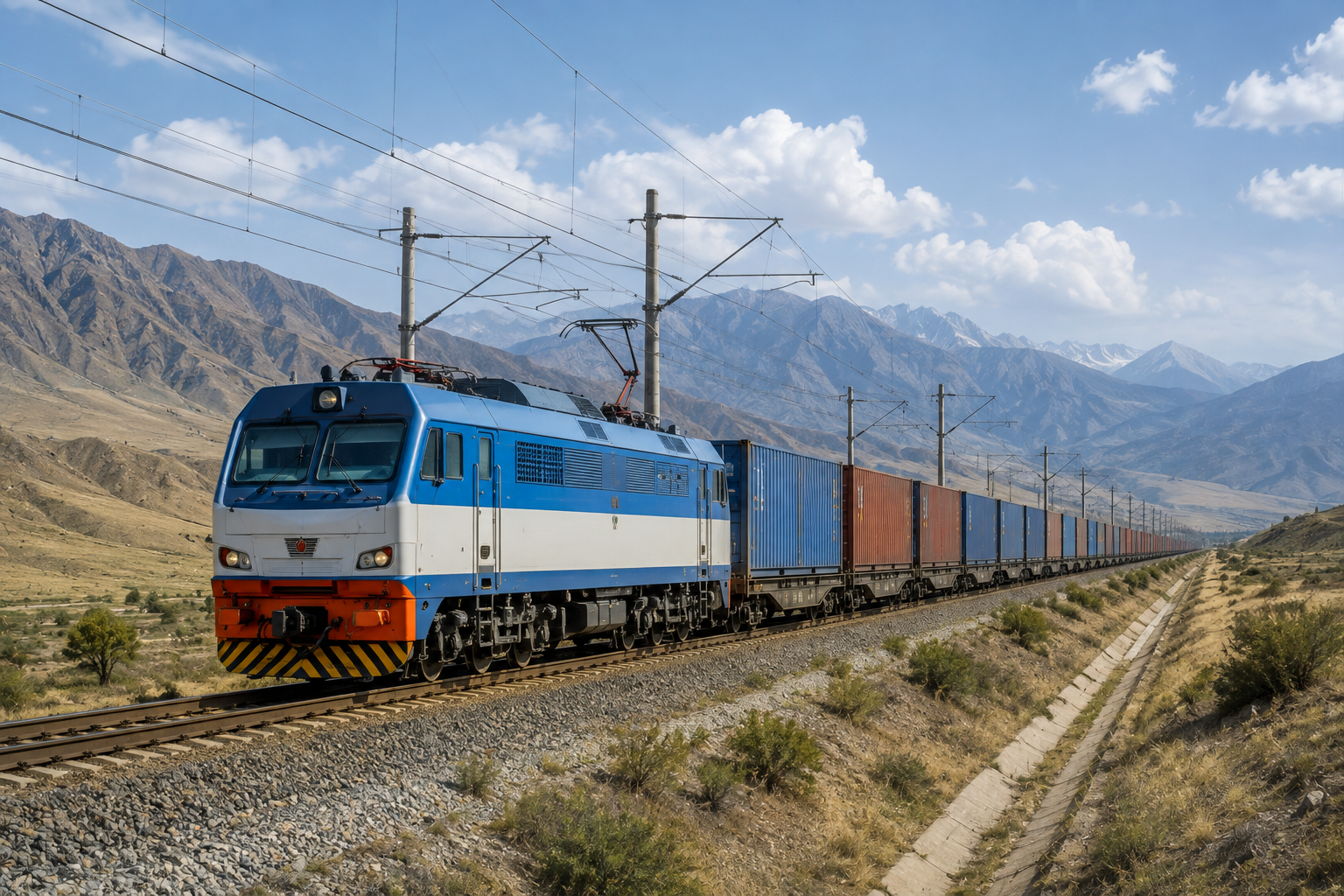
For thirty years after the Soviet Union broke up, trade between Central Asia and Europe went mostly through Russia. This was normal, because the tracks and pipelines were already there. But lately we are witnessing this change fast, and one route is now at the centre of it.
What changed
The Middle Corridor (also called the Trans-Caspian International Transport Route, or TITR) goes from China through Kazakhstan, across the Caspian Sea, through Azerbaijan and Georgia, and into Europe. It skips Russia completely. For years, this was only a backup option, because it was slower and more expensive than going through Russia. The war in Ukraine changed this (ISPI). ISPI’s analysis says the corridor still has real problems: it crosses many countries, each with its own border rules and systems, and this makes transit slower at every crossing. But steady investment in ports, rail and digital customs is starting to work, and every country on the route gains as more cargo moves through it. Countries in the region no longer see this route as a fallback. They are racing to make it permanent.
The numbers show this clearly. Azerbaijan Railways said container shipments went up 56% in the first four months of 2025, and Kazakhstan’s national railway is targeting a similarly steep jump in cargo for the year. Ports are growing, new rail lines are being built between Kazakhstan and Uzbekistan (the two biggest economies in Central Asia), and a big new logistics hub is under construction near Tashkent.
Azerbaijan sits in the middle of all this. Total cargo moving through the country, by road, rail and air, just hit a five-year high. The Baku International Sea Port is being expanded to handle 25 million tonnes of cargo a year by 2030. The Baku-Tbilisi-Kars railway, the direct rail link to Turkey and Europe, is also being upgraded. On top of this, the Asian Development Bank plans to give up to 2.5 billion dollars to help turn Azerbaijan into a regional hub for trade, transport and energy. This growth makes economic sense, especially now that the old Russia route looks much less reliable.
What is actually moving on the trains
For me, this is the most interesting part, and it goes beyond logistics. Kazakhstan and Uzbekistan together produce close to half of the world’s mined uranium. This makes Central Asia more and more important as countries build more nuclear power alongside renewables. Global demand for nuclear power is expected to keep growing for years, as countries look for reliable, low-carbon electricity to sit alongside renewables.
Kazakhstan’s state nuclear company has been shipping uranium through the Middle Corridor since 2018. By 2023, more than half of its uranium exports to Western buyers moved this way – a direct response to sanctions risk on the Russian route.
So Kazakhstan and Uzbekistan hold both the route and the resource that the next stage of the energy transition will need.
My opinion
The Middle Corridor confirms something I have believed for a while: infrastructure gets built when people really need it, not just when someone has a big plan on paper. For thirty years, nobody had a strong reason to build an expensive route around Russia. Now there is a reason, and the money and rail lines are following it.
The corridor still depends on ports, border systems and several governments working together, and any of these could cause delays. But Central Asia is no longer a region that investors and policymakers can overlook. It has become a real strategic point connecting energy, trade and geopolitics.